DARWESH MOHAMMAD S.A.W.W

About Us

Tuesday, 31 May 2016

DAESH RAPE MUSLIM GIRLS??????IS THIS ISLAM???????

ISIS(MONSTER)Girls as young as nine married off by Daesh 

raped and taught to be good wives

Pearls of the Caliphate

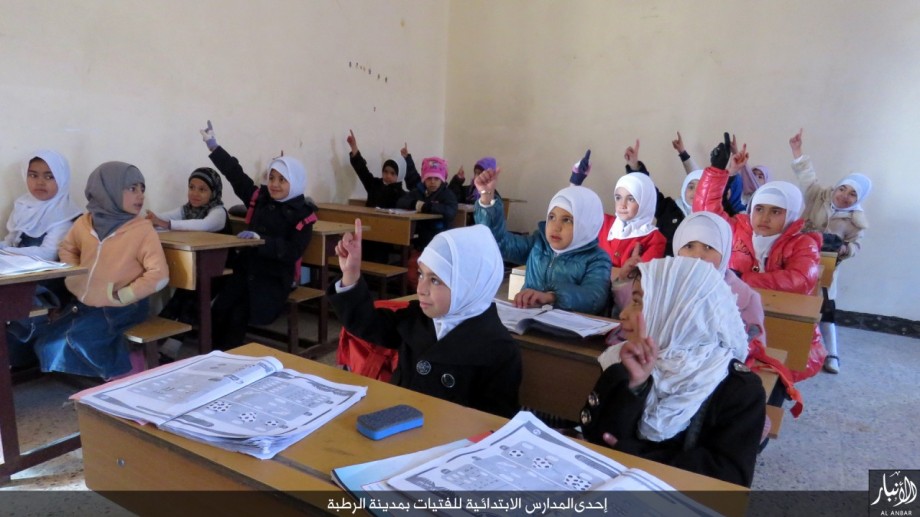
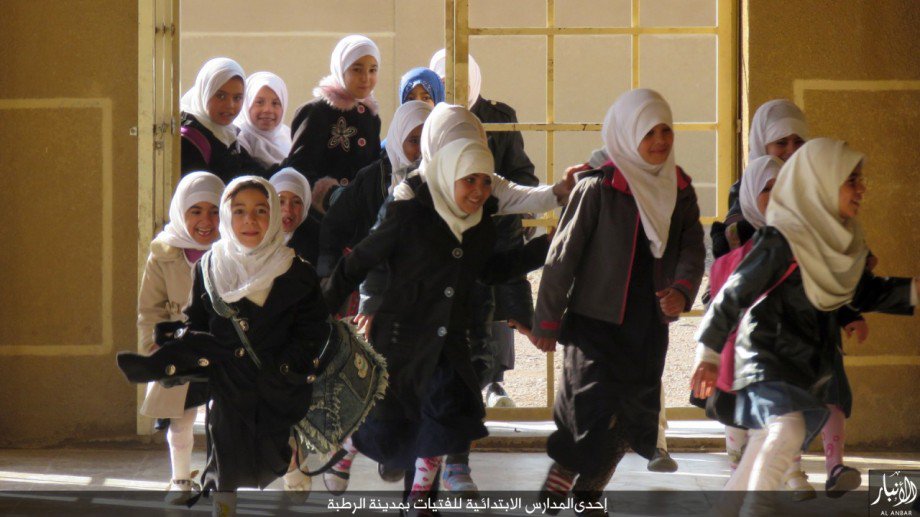
Young girls indoctrinated by the Islamic State can be married off at the age of nine and are taught in schools to be good wives and mothers. The young children, referred to as 'Pearls of the Caliphate', are also subjected to a regime of systematic rape and abuse, a report has shown.
A study by the London-based thinktank the Quilliam foundation, 'The Children of the Islamic State,' has documented in detail the Isis blueprint for girls and women inside its territory.
It is considered legitimate for a girl to be married at the age of nine, or at the latest by 16 or 17," the report stipulated. Under the jihadi group's harsh regime, they are also only expected only to leave the house in exceptional circumstances. "They are to be fully veiled, remain hidden, and never leave the house," the study explains.
'The Children of the Islamic State' outlines a world in which girls are given a domestic education whereby they are taught to look after the needs of their husbands, bring up their children with IS (Daesh) ideology, and maintain their house. They are taught to be proficient in skills like sewing and knitting.
The study quotes Isis propaganda which claims the woman's role is "building the Ummah [community], producing men, and sending them out to the fierceness of battle"
.Pearls of the Caliphate
The Quilliam Foundation also reported on the brutality experience by girls under Islamic State rule. Some of those who had first-hand knowledge of the widespread rape and abuse said some of the girls were probably too young to understand what was happening to them. Several women reported that, while in captivity, young women and girls were taken and raped on a daily basis by IS fighters. An elderly woman reported that the young women would come back after some hours or days in a "miserable condition".
One described how she was raped in Mosul and heard the screams of girls also being absued in an adjacent room. She recounted how she saw an IS fighter threaten one young girl at gunpoint who had been resisting. After Mosul, they were taken to a school in Tal Afar where there were reportedly more than 100 small children
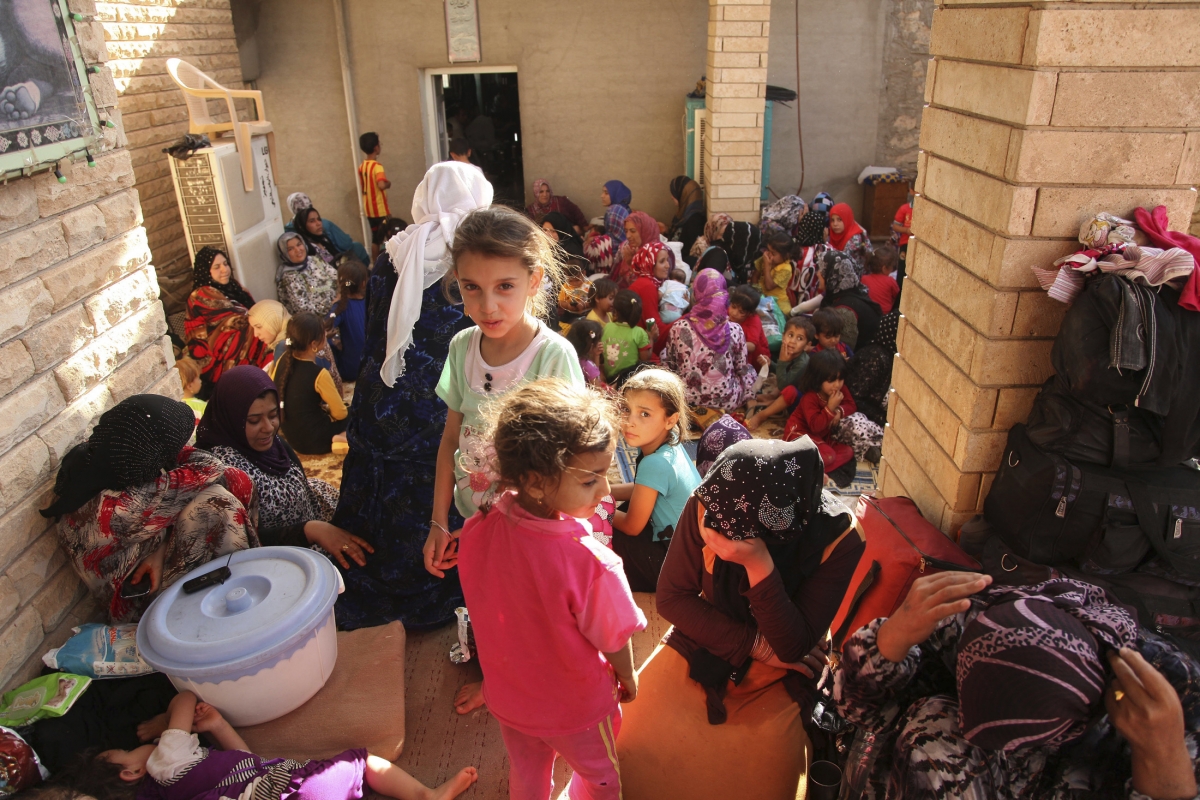
Turkmen Families
The town in north-west Iraq appears to have been centre for the abuse of women and small children after it fell to the Islamic State in June 2014.
The second girl said she was raped in a hall where she was being detained with other women. Guards raped her three times a day for three days, according to her account. She also saw an eight or nine-year old girl being raped openly in the hall.
The study has been endorsed by the UN and is due to be published in Parliament on Wednesday (9 March). Its says 50 British children are growing up in the Islamic State, with an estimated 30,000 foreign recruits, more than 800 of them from the UK fighting for Daesh.
There are currently 31,000 pregnant women in Islamic State, according to the research. Noman Benotman, President of Quilliam, said in a statement: "This is one of the gravest situations on earth. Children are the key to the future. Indoctrination in Islamic State begins at birth, and increases in schools and training camps. Children are instructed in a particular interpretation of shari'a, desensitised to violence, and learn specific skills to take up the banner of jihad
Share:

Monday, 30 May 2016

GENERAL YAHYA KHAN AND GENERAL RANI???????????WHAT A LOVE STORY!!!

Her real name was Aqleem Akhtar. In the late 1960s she began being called General Rani (the Queen General). Between 1969 and 1971 she was considered to be perhaps the most powerful woman in Pakistan.
A muse and mistress of Pakistani dictator, General Yahya Khan, and many-a-times the main brain behind the swinging General’s regime, General Rani was the person a number of bureaucrats and politicians approached when they wanted Yahya’s attention.
Born in the Pakistani city of Gujrat into a well-to-do but conservative family, Aqleem was married off early to a policeman who was twice her age. For years she played well the role of a good wife, bearing six children and never venturing out of the house without a burqa (veil/abaya). Then one day in 1963, while holidaying with her husband in the cool hills of Murree, something snapped in her. Walking with her husband among the tall pine trees of the hills, a gust of wind blew away the burqa from her face. Enjoying the wind softly breezing across her face, she let it make her burqa flap away and expose her face.
She casually proceeded to take off the burqa from the rest of her body
Agitated by her callousness, her husband admonished her. She stopped walking. She stared back at him and then casually proceeded to take off the burqa from the rest of her body. Then after tossing it at him, she walked away, asking him to wear it himself!
She also took the couple’s six children with her but struggled to make ends meet when her parents insisted that they would only help her if she got back with her husband. Alone, with six kids and without a job, Aqeel plotted to get close to powerful, rich men.
She began visiting those nightclubs in Karachi and other such clubs in Lahore and Rawalpindi that were frequented by the political, military and business elite. Finding the men bored with their wives she began arranging ‘dance parties’ for them. She used beautiful young women who had run away from their homes after facing poverty.
But instead of doing her ‘arranging’ business from the country’s two most famous red light districts (Karachi’s Napier Road and Lahore’s Heera Mandi), she operated from an apartment in Rawalpindi. It was at a club that was frequented by the country’s top military men in Rawalpindi where Pakistan’s future dictator, General Yahya Khan, fell for her. A compulsive drinker and womaniser, Yahya began an affair with Aqleem sometime in 1967. But throughout her relationship with Yahya, she kept insisting that they were ‘just friends.’
When a leftist movement between 1968 and 1969 forced General Ayub Khan to resign as head of state, he installed Yahya Khan as the country’s new Martial Law Administrator. It was at this point that Aqleem began being called (in the press), ‘General Rani.’ It is believed that apart from looking after Yahya’s ferocious appetite for booze and women, she also began ‘advising’ him on policy and political matters.
Those who met her in those days described her to be far more informed and astute in the field of politics than Yahya.
Soon she was being visited by all kinds of politicians, bureaucrats and military men, some asking her to arrange her now-famous parties for them, or get the General to meet them or do certain favors for them.
One of her clients was Pakistan’s legendary singer and actress, Noor Jehan
One of her clients was also Pakistan’s legendary singer and actress, Noor Jehan. She had approached Aqleem after the Income Tax Department had charged her for withholding thousands of rupees worth of income tax. Noor Jehan asked Aqleem to request Yahya to intervene. Aqleem did. The General asked the income tax people to back off and then proceeded to begin an affair with Noor Jehan.
The daring woman who had rebelled against her husband’s conservative and demeaning behavior towards her, and then was left with nothing more than six hungry children, and no consistent source of income, became a powerful, influential and rich woman during Yahya Khan’s short dictatorship.
The good fortune lasted till early 1972. Yahya, after leading Pakistan into a disastrous war against India in December 1971, was disgraced when asked by the military and political parties to step down.  He died in seclusion in 1980.
Z A. Bhutto’s Pakistan Peoples Party that had won the majority of seats in West Pakistan in the 1970 election took over the reigns of power from the military. Bhutto at once began to arrest military men, bureaucrats and politicians who had supported Ayub and Yahya’s dictatorships.
And even though it is believed that Bhutto was on good terms with Aqleem, he did not hold back and asked the police to put her under house arrest as well. During the Bhutto regime (1972-77), Aqleem was constantly shuttled between house arrest and jail. Her cases were mostly contested in the courts by famous lawyer, S M. Zafar.
She was finally released from house arrest when in July 1977 General Ziaul Haq toppled the Bhutto regime in a military coup. But by then, she had lost most of her wealth and property and was back to being a pauper.
In the early 1980s someone advised her to get into a new kind of business that had begun to thrive during the reactionary Zia regime: drug smuggling and trafficking. Though it is not known how much she got involved, it is believed that after having a fall-out with some of Zia’s top military men, she was charged with drug trafficking and jailed. She was bailed out by a few friends and the cases against her were quashed at the end of the Zia dictatorship in 1988.
Though, all her children had by now established themselves and become independent, Aqleem became a recluse, living alone and disallowed (by her children) to speak to the media or anyone who was not family.
She outlived most of her friends and foes, but it was largely a lonely, broken life. Suffering from cancer in the later days of her life, she quietly passed away in 2002 at the age of 70.
- See more at: http://www.thefridaytimes.com/tft/the-fascinating-tale-of-general-rani/#sthash.fQhK4lOb.dpufThe fascinating tale of General Rani
Share:

SHOCKING TRUTH !!!!!IS PAKISTAN FREE ON 14TH AUGUST???NO?????

August 15 — Pakistan's Independence DayMost Pakistanis believe their country appeared on the world map on August 14, but historical sources reveal otherwise. —AP

syed Shamsuddin, a friend of mine, often gets irritated when people fail to show up on time for meetings; some of them are late by a day. For quite some time now, he has been asking the latecomers to wear calendars – instead of watches – on their wrists so that they could at least turn up on the appointed day, if not time.

My mentor Mr Hussain Naqi, too, is big on punctuality. People who have met him or attended training workshops on human rights under his supervision will attest to that.
In 2003, I attended a workshop under Hussain Naqi, that the Human Rights Commission of Pakistan (HRCP) conducted in Lahore. On the second or third day of the event, senior political analyst and journalist Imtiaz Alam walked into the hall – he was seen for the first time – and complained to Naqi sahab:
"I have been invited to a programme, but I don't see one face that I had expected to find here."
Naqi sahab smiled, emptied out the tobacco from his pipe into an ashtray, and retorted, "You are late by only 24 hours, and, yes, now I can understand why the Red Revolution did not make it to Pakistan on time."
Coming back to Pakistan and timeliness, the point I intend to raise is about an important date in our national history – the day Pakistan came into being. There is a widespread belief that our country appeared on the world map on 14th August 1947, but historical facts reveal that this matter is a little more complicated.

Murder of History — K.K. Aziz

Renowned historian K.K. Aziz writes on page 180 of his book, Murder of History:
"The general impression, confirmed and reinforced by the official celebration of Independence, that Pakistan became free on 14th August is not correct. The Indian Independence Bill, which was introduced in the British Parliament on 4th July and which became law on 15th July, laid down that the two new Dominions of India and Pakistan shall become free at the midnight of 14-15 August.
"The power had to be personally transferred to the new countries by the Viceroy, who was the British King's sole representative in India. Lord Mountbatten could not be present in person in Karachi and New Delhi at the same moment. Nor could he transfer power to India on the morning of 15th August and then rush to Karachi, because by that time, he would have become the Governor General of the new Indian Dominion.
"So the only practicable thing was for him to transfer power to Pakistan on 14th August when he was still the Viceroy of India. But that does not mean that Pakistan gained its independence on 14th August. The Indian Independence Act did not provide for it."

Indian Independence Act, 1947

A copy of the Indian Independence Act, 1947 (available here), confirms the argument put forth by K. K. Aziz. Clause 1 of the Article 1 titled "The new Dominians", reads:
"As from the fifteenth day of August, nineteen hundred and forty-seven, two independent Dominions shall be set up in India, to be known respectively as India and Pakistan."
The Indian Independence Act is not the only evidence.

Zahoor-i-Pakistan — Chaudhry Muhammad Ali

Former Prime Minister Chaudhry Muhammad Ali published a book The Emergence of Pakistan, a semi-autobiographical account, in 1967. An Urdu translation of the book, titled Zahoor-i-Pakistan, was produced by Bashir Ahmed Arshid. An excerpt on page 287 of Zahoor-i-Pakistan reads:
"Fifteenth August 1947 was the last Friday of Ramadan-ul-Mubarak, one of the holiest days in Islam. On that auspicious day, Quaid-i-Azam became the Governor-General of Pakistan and the cabinet was sworn in, the star-and-crescent flag was hoisted, and Pakistan emerged on the world map.
"On 15th August 1947, Quaid-i-Azam sent the following message to the nation, 'At this supreme moment my thoughts are with those valiant fighters in our cause. Pakistan will remain grateful to them and cherish the memory of those who are no more.’”
Chaudhry Muhammad Ali published his book 22 years after Independence, and he lived on until 1980, but he never withdrew his assertion about the date of Independence, though it was during his lifetime that Pakistan began to celebrate the Independence Day on August 14, instead of 15, every year.
There is another authentic source to verify the fact that Independence was gained on 15th August and not on 14th: A collection of speeches by Muhammad Ali Jinnah published in 1989, by The Directorate of Films and Publications, under the Ministry of Information and Broadcasting.

Jinnah's August 15 speech

The collection, titled Quaid-e-Azam Mohammad Ali Jinnah: Speeches and Statements as Governor-General of Pakistan 1947-48, includes a speech under the heading "Peace Within, and Peace Without" on pages 55-56. The speech follows a short introduction, and the first few lines read thus:
"Message to the Nation on the occasion of the inauguration of the Pakistan Broadcasting service; August 15, 1947.
“Inaugurating the Pakistan Broadcasting service on August 15, 1947, Quaid e Azam Mohammad Ali Jinnah issued following message to the nation:
“'It is with feelings of greatest happiness and emotion that I send you my greetings. August 15 is the birth day of the independent and sovereign state of Pakistan.'"

Quaid-i-Azam Rahmatullah Alaih: Akhri Do Saal — Manzoor A. Butt

Manzoor Ahmed Butt (who is introduced on the first page of the book as a recipient of the Pride of Performance award) says:
“After Pakistan came into being as an independent Muslim state on 14 August 1947, the announcement was made on the same night after 12am from Lahore, Karachi and Peshawar radio stations. Amidst those historic and providential moments, following the recitation of Holy Quran . . . Jinnah's message of greetings to the nation went on air.
“The message had already been recorded in late July, soon after it became clear that Pakistan would be created. Three records of this most important speech had been sent to Lahore, Karachi and Peshawar radio stations through some reliable persons. It is the first post-Independence radio speech by Jinnah.
“Mr Ansar Nasri, the former Deputy Director of Radio Pakistan, translated the speech into Urdu before it could be transmitted in the vernacular for the listeners of Radio Pakistan Peshawar. He also transcribed the speech and published it for the first time. Qauid-i-Azam spoke to the nation immediately after Pakistan came into being on 14 August 1947.”
Butt says that the speech went on air after 12am on the night between 14 and 15 August, but he seems to be unaware of the rule that a new day begins after 12am. He does not provide clear citations for this episode of history, and though he gives a bibliography that includes 45 books, he claims to have used for his research, it is for the readers to figure out a connection between these books and his text. I hope that he comes across this blog and guides me in my efforts. I am open to any corrections from anyone.
Historical documents and speeches, and books dealing with history make it evident that Pakistan's Independence Day falls on 15th August. Philip Ziegler, the official biographer of the last Viceroy of India, too, says inMountbatten: The Official Biography, that Pakistan was created on the 15th of August.
Thus, a former prime minister declares 15th August to be the day of Independence for Pakistan, a book published by the Information Ministry records the same date, and the biography of Lord Mountbatten and the Indian Independence Act, too, vouchsafe that our country come into being indeed on 15th August 1947.
I wonder why the date was changed afterwards and why we have accepted 14th August to be the day of our Independence.
I am just an ordinary student of history. I put the following question to historians:
Are there, in this world, any other two nations that have gained independence on the same day, with joint efforts and from the same colonial power, but which prefer to celebrate the anniversaries of their independence on different days?
Or is this peculiar only to Pakistan and India?http://ac8d4zskttmw8vdgybciohp60l.hop.clickbank.net/?tid=BLOGGER
Share:

WHO IS IQBAL?A STORY OF GREAT LEADER

Name: Doctor Allama Mohammad Iqbal
Personality: Philosopher, Poet, politician
Born (Birthday): 9 November 1877
Birth Place: Sialkot (Now Pakistan)
Books: Stray reflections, Shikwah, jawab-e-shikwah, Poems from Iqbal, Allama Iqbal, selected poetry, Tulip in the desert, Ilm Al-Iqtisad,Poems for kids
Education: Government College University, University of Cambridge, Murray College, Ludwig Maximilian University of Munich, TrinityAllama Muhammad Iqbal (1877-1938)

Allama Muhammad Iqbal (1877-1938)

Sir Muhammad Iqbal, also known as Allama Iqbal was a philosopher, poet and politician in British India who was born on 9 November 1877 and died on 21th April 1938. He is considered one of the most important figures in Urdu literature, with literary work in both Urdu and Persian languages.he was also called as Muslim philosophical thinker of modern times. Iqbal is known as Shair-e-Mushriq meaning Poet of the East. He is also called Muffakir-e-Pakistan (“The Inceptor of Pakistan”) and Hakeem-ul-Ummat (“The Sage of the Ummah”). In Iran and Afghanistan he is famous as Iqbāl-e Lāhorī or Iqbal of Lahore, and he is most appreciated for his Persian work. Pakistan Government had recognised him as its “national poet.He has different literary and narrative works. His first poetry book, Asrar-e-Khudi, appeared in the Persian language in 1915, and other books of poetry include Rumuz-i-Bekhudi, Payam-i-Mashriq and Zabur-i-Ajam. Amongst these his best known Urdu works are Bang-i-Dara, Bal-i-Jibril, Zarb-i Kalim and a part of Armughan-e-Hijaz and also Pas che bayad kard.he had series of lectures in different educational institutions that were later on published by Oxford press as ‘’the Reconstruction of Islamic religious thoughts in Islam’’. Iqbal was influenced by the teachings of Sir Thomas Arnold, his philosophy teacher at Government college Lahore, Arnold’s teachings determined Iqbal to pursue higher education in West. In 1905, he traveled to England for his higher education. Iqbal qualified for a scholarship from Trinity College in Cambridge and obtained Bachelor of Arts in 1906, and in the same year he was called to the bar as a barrister from Lincoln’s Inn. In 1907, Iqbal moved to Germany to study doctorate and earned PhD degree from the Ludwig Maximilian University, Munich in 1908. Working under the guidance of Friedrich Hommel, Iqbal published his doctoral thesis in 1908 entitled: The Development of Metaphysics in Persia. During his study in Europe, Iqbal began to write poetry in Persian. He prioritized it because he believed he had found an easy way to express his thoughts. He would write continuously in Persian throughout his life. Iqbal, after completing his Master of Arts degree in 1899, initiated his career as a reader of Arabic at Oriental College and shortly was selected as a junior professor of philosophy at Government College Lahore, where he had also been a stundent; Iqbal worked there until he left for England in 1905. In 1908, Iqbal returned from England and joined again the same college as a professor of philosophy and English literature. At the same period Iqbal began practicing law at Chief Court Lahore, but soon Iqbal quit law practice, and devoted himself in literary works and became an active member of Anjuman-e-Himayat-e-Islam. In 1919, he became the general secretary of the same organisation. Iqbal’s thoughts in his work primarily focus on the spiritual direction and development of human society, centered around experiences from his travels and stays in Western Europe and the Middle East. He was profoundly influenced by Western philosophers such as Friedrich Nietzsche, Henri Bergson and Goethe.
The poetry and philosophy of Mawlana Rumi bore the deepest influence on Iqbal’s mind. Deeply grounded in religion since childhood, Iqbal began intensely concentrating on the study of Islam, the culture and history of Islamic civilization and its political future, while embracing Rumi as his guide.
Iqbal had a great role in Muslim political movement. Iqbal had remained active in the Muslim League. He did not support Indian involvement in World War I, as well as the Khilafat movement and remained in close touch with Muslim political leaders such as Maulana Mohammad Ali and Muhammad Ali Jinnah. He was a critic of the mainstream Indian National Congress, which he regarded as dominated by Hindus and was disappointed with the League when during the 1920s, it was absorbed in factional divides between the pro-British group led by Sir Muhammad Shafi and the centrist group led by Jinnah.
Ideologically separated from Congress Muslim leaders, Iqbal had also been disillusioned with the politicians of the Muslim League owing to the factional conflict that plagued the League in the 1920s. Discontent with factional leaders like Sir Muhammad Shafi and Sir Fazl-ur-Rahman, Iqbal came to believe that only Muhammad Ali Jinnah was a political leader capable of preserving this unity and fulfilling the League’s objectives on Muslim political empowerment. Building a strong, personal correspondence with Jinnah, Iqbal was an influential force in convincing Jinnah to end his self-imposed exile in London, return to India and take charge of the League. Iqbal firmly believed that Jinnah was the only leader capable of drawing Indian Muslims to the League and maintaining party unity before the British and the Congress:
In his presidential address on December 29, 1930, Iqbal outlined a vision of an independent state for Muslim-majority provinces in northwestern India, “I would like to see the Punjab, North-West Frontier Province, Sind and Baluchistan amalgamated into a single state. Self-government within the British Empire, or without the British Empire, the formation of a consolidated Northwest Indian Muslim state appears to me to be , at least of Northwest India.
Iqbal was the first patron of the historical, political, religious, cultural journal of Muslims of British India. This journal played an important part in the Pakistan movement. The name of this journal is The Journal Tolu-e-Islam.
Iqbal wrote two books on the topic of The Development of Metaphysics in Persia and The Reconstruction of Religious Thought in Islam and many letters in English language, besides his Urdu and Persian literary works. In which, he revealed his thoughts regarding Persian ideology and Islamic Sufism – in particular, his beliefs that Islamic Sufism activates the searching soul to a superior perception of life. He also discussed philosophy, God and the meaning of prayer, human spirit and Muslim culture, as well as other political, social and religious problems.
Iqbal’s views on the Western world were applauded by men including United States Supreme Court Associate Justice William O. Douglas, who said that Iqbal’s beliefs had “universal appeal”.In his Soviet biography N. P. Anikoy wrote, “(Iqbal is) great for his passionate condemnation of weak will and passiveness, his angry protest against inequality, discrimination and oppression in all forms i.e., economic, social, political, national, racial, religious, etc., his preaching of optimism, an active attitude towards life and man’s high purpose in the world, in a word, he is great for his assertion of the noble ideals and principles of humanism, democracy, peace and friendship among peoples.
Iqbal died on 21th April 1938 due to severe throat infection that lasted for long till his death. He will be remembered for good.
Aasmaan teri lahad per shabnam afshaani kare
Sabza e noorasta is ghar ki nigeh baani kare College, Cambridge
http://3a5521tkvkpx0r5jmmumvddqf5.hop.clickbank.net/?tid=BLOGGER
Share:

Sunday, 29 May 2016

HOW LEADER IS FORM???

http://18710-yotqnt0kcpj7tyv9qe9b.hop.clickbank.net/

PLEASE VISIT ABOVE MENTION LINK AND PURCHASE PRODUCTS AND HELP SYRIAN REFUGES 

It’s Time for a New Discussion on “Women in Leadership”

The time has come to reframe the gender issue. The chancellor of Germany, the head of the IMF, and the chair of the US Federal Reserve are women. General Motors, IBM and Lockheed Martin are run by women. Sixty percent of the world’s university graduates are women, and women control the majority of consumer goods buying decisions. In the US, women under 30 out-earn their male peers and 40% of American households have women as the main breadwinner. In many companies and countries where I work, from Iran or Brazil to Russia, managers tell me that they recruit a majority of young women as they clearly outperform their male peers.

And yet women continue to be underrepresented in most businesses, especially at the senior levels. Given this split – women’s potential on the one hand, and their relative absence from the highest levels of business on the other – it is tempting to keep banging on about “fairness” and “equality” on the one hand, or to assume that surely the women who don’t make it to the top must be doing something wrong on the other.
In fact, it is time to shift the discussion away from a lingering women’s problem or an issue of equality and instead focus on this as a massive business opportunity. Instead of continuing to discuss the problem, we ought to present solutions: roadmaps to businesses that are better balanced, arguments that help companies and managers understand and benefit from shifting global gender balances. The shift is away from wondering what is wrong with women who don’t make it to the top, and towards analysing what is right with companies and leaders that do build gender balanced leadership teams – and tap into the resulting competitive edge.
Smart leaders have understood for a while now that gender balance delivers better and moresustainable performance. That companies with more gender-balanced leadership teams out-perform those with less. While the skeptics will spend another decade resisting this fact with demands to prove causality, the best leaders prefer leading the charge to following it. So it would now make sense to focus on the leadership competencies that enable certain leaders to build gender-balanced organizations. And to note those that don’t, and start calling them to account.
Building a gender-balanced organization takes skill, determination, and courage. It can be taught, encouraged, and rewarded. That’s what the best companies do. They put the focus and the accountability where change happens: on the front lines. As with other change management initiatives, the responsibility ultimately falls to leaders.
And yet today, many managers (both male and female) are totally uneducated in all things gender. Many business leaders around the world have no idea that women are now the majority of university graduates – from Sweden to Saudi Arabia. They aren’t aware of — or comfortable with — the differences between how men and women work. Executives have been raised to ignore gender differences (such as different communications styles or career cycles) rather than become skilled in managing them. For the same reason (“only competence counts” is the usual refrain), they aren’t used to thinking that balanceitself may contribute to better performance, innovation and customer connections. So we must educate them. Stop creating internal, women-only networks — replace them with mixed-gender networks aimed at balancing management, rather than promoting women. Almost no one is against balancing, while many men and women alike are uncomfortable with targeted quotas for women. Men feel that they are deeply unfair, while women are insulted at the idea of being perceived as getting promotions only because of their gender.
http://e5c108olrjho4l945efihlt6zq.hop.clickbank.net/?tid=BLOGGER
I do think there is a role for advocates in this shift. External watchdog groups, focused on corporate performance and governance, can be powerful amplifiers of the kind of leadership that we are aiming for. They should be focused on measuring and celebrating what the best companies and CEOs do, and publicizing and shaming those that don’t deliver. They should be fun, relentless, and professional. They should also, I would argue, focus more on “balance” than on “women.” Include men who get it – and celebrate that fact. It’s time. Reframe, rebrand, and make leaders accountable for adapting to 21st century realities. That is the work that now lies ahead.
The world is living through one of its most historic and peaceful revolutions: the gradual rebalancing of the genders’ social, educational and economic power. We have never seen anything like it before – no wonder it has been a bit confusing. This rise, and its consequences, need to be better understood and managed by most businesses and managers. It has altered the life of every man, woman and child on the planet. It yields opportunities and competitive advantage to smart companies. Who would want to miss out on that?
Share:

IS IT POSSIBLE? SHOCKING HEALTH TIPS

http://e04f9anivwhw0n0kp3sayitw6s.hop.clickbank.net/http://e04f9anivwhw0n0kp3sayitw6s.hop.clickbank.net/
PLEASE VISIT ABOVE MENTION LINK AND PURCHASE FOR SYRIAN PEOPLE!!!!!!!!!HELP THEM THEY ARE IN WAR

4 Smoothie Recipes for Weight Loss


I've always loved making smoothies, but I learned something very important this year while working with my registered dietician, Heather Wallace: It's imperative I include protein with every meal and snack. Therefore I've been adding a scoop of whey protein powder to my daily smoothies and have noticed I do stay fuller longer. The added protein also helps my muscles recover from my workouts. It's a win-win all the way around!
Here are four of my favorite recipes:
Pumpkin Pie Shake
1 cup unsweetened vanilla almond milk
1 scoop whey vanilla protein powder
1/4 cup water
1/4 cup canned pumpkin
1 teaspoon flaxseed
1 packet Stevia or 1 teaspoon honey
1/4 teaspoon cinnamon
1/4 teaspoon vanilla extract
7 to 8 ice cubes
Berry Smoothie
1 cup unsweetened vanilla almond milk
1/2 cup water
1 cup frozen mixed berries
1 scoop whey protein powder
1 tablespoon flaxseed
1 teaspoon chia seeds
(Sometimes I throw in a handful of spinach, kale, or a teaspoon of honey.)
Nut-Butter Smoothie
1 cup unsweetened vanilla almond milk
1/2 cup water
1 tablespoon almond butter or NuttZo (peanut-free option)
1 scoop whey protein powder
1 teaspoon honey
7 to 8 ice cubes
(I'm off bananas and peanut butter right now for food sensitivity reasons, but if you love bananas, throw one in for extra deliciousness or substitute Nuttzo for peanut butter!)
Fruit Smoothie
1 cup unsweetened vanilla almond milk
1/2 cup water
1 cup frozen mixed fruit
1 scoop whey protein powder
4 to 5 ice cubes
Share:

Saturday, 28 May 2016

WIEGHT LOSS WITH 1 DRINK

.http://b655e8oorpiyfmfv5lnctdzs33.hop.clickbank.net/

PLEASE VISIT ABOVE MENTION LINK FOR SYRIAN REFUGEES AND 50% GO TO THESE REFUGES IF YOU PURCHASE ANYTHING!


Meal Replacement Shakes for Weight Loss…Do They Work?

There are a lot of products on the market that claim to help you lose weight, including protein shakes, meal replacement bars, supplements and teas.  Do these things really help you lose weight?

Meal Replacement Shakes for Weight Loss

There has been a lot or research published on using meal replacements during weight loss and the research has been pretty compelling.
In today’s post, we’ll tell you just how effective they are, why they are effective, and some little known secrets for supercharging the fat loss potential of this powerful tool.

Go On a Diet Or Add Two Meal Replacements…Your Choice

According to the research, using meal replacements could result in an equal amount of weight loss compared to structured dieting…
According to one Australian study, a group of overweight/obese subjects were either instructed to replace two meals with a can of SlimFast (which we consider a mediocre product) or were given food vouchers and detailed instructions for eating a low fat/low-calorie diet.
At the end of the study, both groups had lost about the same amount of weight over a 6 month period (~ 9 kgs, equal to approximately 20 pounds).1

Meal Replacements Helps More People Stick To The Program

In the Australian study, the folks who replaced their meals with shakes had an easier time sticking to the program than the structured-diet group. This benefit was also seen in other studies as well!
In a British study, women who were given meal replacements enjoyed similar weight loss than those who were placed on a standard low-calorie diet. What was interesting was that more women in the meal replacement group responded to the intervention than in the diet only group.2
It appears that convenience is a key advantage of replacement shakes! It seems like common sense, but I can tell you that common sense does not always win out in the weight loss research…in this case, however, it does! Convenience matters…

Meal Replacement Shakes Help You Keep It Off

One study from the U.S. Army found that soldiers who were randomized to meal replacements versus diet counseling alone, lost 2.6 more pounds of weight and 1.6 more pounds of fat. What was interesting was that this intervention was meant to help the subjects maintain weight loss, rather than to produce weight loss.3
It bares mentioning that other research has confirmed that 1-2 meal replacement shakes can help you to maintain your fat loss after your weight loss goals have been met.

Why Meal Replacement Shakes Work…

People have difficulty losing weight for one of two reasons, either they’re eating too many calories or they’re eating too few calories.
I’ll point out that I do not ascribe to a calorie-counting model of weight loss, it’s my opinion that calorie intake is regulated by hormones and the proper way to burn fat is to correct the hormonal imbalances in the body so that the subconscious areas of the brain will control caloric intake with little conscious effort on your part.
For more information on why the “Calories In, Calories Out” model of weight loss is insufficient, check out the podcast Episode 56: Exterminating the Calorie-Myth of Weight Loss With Jonathan Bailor of The Smarter Science of Slim. For now, let’s just say that you’re either eating too many calories or too few calories…different ends of the spectrum, the same result…stalled fat loss or fat gain.

If You Eat Too Much…

Most of these products are designed to help you reduce your calorie intake by offering a convenient alternative to higher calorie meals and snacks.  For example: If a typical meal for you contains 500 calories and you replace two of those meals each day with a protein bar or diet shake that contains 200 calories each, you’ve cut 600 calories from your diet without much effort or deprivation.  That could certainly help you burn fat, but only if you are eating a lot of extra calories.
Meal replacement shakes are also extremely convenient. Often times, convenience means the difference between fat loss success and failure. When you have a craving for chocolate, if you have a chocolate protein shake handy, then you may be able to scratch that dietary itch without the negative consequence of excess calories or carbs.

Quality Shakes Can Shift The Carb-Protein Balance…

Meal replacement shakes can help you to replace a normal high-carb, high-fat meal with a higher-protein alternative, which can swing the macro-nutrient balance in favor of fat loss.
By replacing that high-carb/high-fat meal with a protein shake, you may significantly decrease the total amount of insulin that your body produces in a day and the total amount of glucose that your liver has to process. These two factors are almost guaranteed to result in less fat storage.
By shifting the macro-nutrient balance in favor of less glucose and less insulin, you will better balance various hormones that will impact fat storage, metabolism, and appetite.

If You Eat Too Few Calories….http://b655e8oorpiyfmfv5lnctdzs33.hop.clickbank.net/

If you fall into the camp that is constantly starving themselves by dieting, then adding a protein shake on top of the calories that you consume may help to protect the muscle, lower hunger hormones, and stoke metabolism.
If you’re eating too few calories, the trick is to use these shakes as an additional snack, rather than a replacement for food.

The Secrets to Supercharging Your Meal Replacement Shake for Weight Loss…

Clearly meal replacements can play an important role in your weight loss lifestyle and they can even mean the difference between success and failure for many people, but they only work if you know one important secret, without this first secret, I feel that this valuable tool will be a total and utter failure…
In order for you to use meal replacement shakes successfully; you must use them as support for a REAL FOOD DIET!
If you expect to live off of a diet of bars and shakes, it may work for a while, but eventually your body will catch on and weight loss will cease. Soon, cravings will take over and the replacement supplements will be rendered totally ineffective.
Real food, meaning fruits, vegetables, nuts, meat, eggs, etc., are complex nutrition-rich foods full of vitamins, mineral, fiber, phytochemicals, fats, proteins, and yet to be discovered compounds that likely have a positive impact on our health, wellness and fat loss efforts.
Bottom line: Your body knows when you’re eating real food and when you’re consuming fake foods (even protein shakes)…it NEEDS real nutrition first. Only then will you get the most benefit from your meal replacements!

Watch Your Fiber!

Fiber is critical for fat loss, in practically every study to date, more fiber intake resulted in more fat loss.
In the research, those people who were given the meal replacement shakes had a tendency to consume less fiber throughout the day.1 You can counter this issue simply by eating more low-glycemic fruits, vegetables, and nuts during your REAL-FOOD meals.
You can add fiber to the meal replacement shakes, which will give you bonus points, but try to get the majority of your fiber from real foods rather than from supplements.

Avoid “Loaded” Meal Replacement Shakes

Many of these meal replacement products are loaded with chemicals, preservatives and artificial sweeteners, which can hinder your weight loss over the long term.
Choose shakes that have fewer than 10 grams of carbs and no more than 5 grams of sugar (less if possible). Look for meal replacement shakes that use stevia, xylitor, lohan fruit, or erythritol as a sweetener. These sweeteners are more natural and won’t negatively impact your blood sugar.

The Best Meal Replacement Is…Wait For It…Wait For It…

All this being said, remember, the best meal replacement is real food. Think about it…
The goal of using meal replacements is to consume fewer calories and to regulate the amount of carbohydrates and unhealthy fats. When you eat real food (i.e. fruits, vegetables, lean meats, fish, poultry, eggs, etc.), you’re almost always consuming fewer calories than what you would get out of a refined food!
Focus on eating real food.  Not processed, chemical-laden so-called “food” – but real, honest-to-goodness food straight from nature.
It has been proven time and time again that the healthiest diet on the planet is comprised of wholesome, natural foods like vegetables, fruit, nuts, seeds, and lean protein.  These foods have been altered very little from their original form, and therefore contain the most nutrients possible.

A Huge Secret For Those Who Are Always Hungry…

Remember this…real foods get registered!
One of the biggest problems with refined diets is that the concentrated, nutrient-poor foods inhibit the body’s ability to register calories!
Your brain has a calorie thermostat that shuts off appetite once you’ve eaten enough to meet the body’s needs.
Let’s say for example that your body’s thermostat is set to 500 calories in a meal. Once you have eaten 500 calories of real food, the brain sends out signals to stop eating…we call these “satiety signals”.http://b655e8oorpiyfmfv5lnctdzs33.hop.clickbank.net/
If, however, you drink 300 calories of soda before your meal even gets to the table, research has shown that those calories fly right under the radar of your calorie thermostat. In other words, you will eat your 500 calories ON TOP of the 300 calories from soda that you already consumed!
Meal replacements can work when eaten as a snack or meal replacement as long as your body feels that you are getting enough real food throughout the rest of the day.
When you cut out excessive sugar, sodium, processed fats and other refined foods, your body functions much more efficiently and you automatically start losing weight.  Real foods are lower in calories, bulkier (thus more filling) and contain far more nutrients than most manufactured weight loss products.
By building a foundation of eating real food, you give your body the best possible chance to return to a healthy weight and stay there – and it will usually happen much faster than it would by relying on dietary aids.
Don’t get me wrong, I use protein shakes, bars, and other supplements, but ONLY on top of a diet made up of mostly REAL food! The protein shakes and bars simply help me get my protein, calories, and snack-fixes in, especially when I am busy or on the run!

How Often Should I Use a Meal Replacement Shake?

Researchers have found that you can replace up to 3 meals with shakes for weight loss purposes, however, my opinion differs slightly…
If you are taking my advice and eating real food for the majority of the day, you should need no more than one to two shakes per day.
Researchers found that replacing a single meal with a meal replacement shake (in this case lunch) resulted in weight loss and no compensatory eating (i.e. subconsciously eating more food to make up for the missing calories).
During the course of this study, participants ended up easily maintaining a deficit of 250 calories despite having access to a buffet each day, they achieved this goal simply by consuming a protein shake in place of lunch.4
I’m a minimalist when it comes to using meal replacement shakes, that is, if you want to use them at all, I would recommend replacing one meal with a protein shake or smoothie, and testing to see how you respond. If need be, increase to two meal replacements per day. I never recommend more than two. If you believe that you need more than one or two shakes, then you’re not likely eating enough real food.
For maintenance, one shake should do it.

A Few More Tips:

  • If you exercise, and I assume that you do, then you could use a protein shake as a post-workout snack. Exercise, especially resistance training, increases the protein needs and having a post-exercise, protein snack, can actually trigger more muscle growth. It is important to have the protein within 1 hour of finishing your workout.
  • If you suffer with diabetes, you may want to start your morning with a low-carb, protein shake. For diabetics, skipping carbs at breakfast could provide a more balanced blood sugar throughout the day, even if it means consuming more carbs with lunch and dinner.
  • Some people like to use liquid protein snacks while juicing or during a fast. If you are fasting, then you may want to use a clean protein powder as a source of additional amino acids  to avoid muscle loss.
  • Protein powders may be a good alternative to higher carbohydrate liquids such as milk and juice. Whenever possible, crowd out these high calorie, high-carb liquids while using the supplements to minimize snacking on refined foodstuffs..http://b655e8oorpiyfmfv5lnctdzs33.hop.clickbank.net/
Share:

Recent

SCIENCE & STUDPID

DR BILAL LIVE LECTURES

Powered by Blogger.

Recent

Random

Random

Recent Posts

Unordered List

Pages

Theme Support